
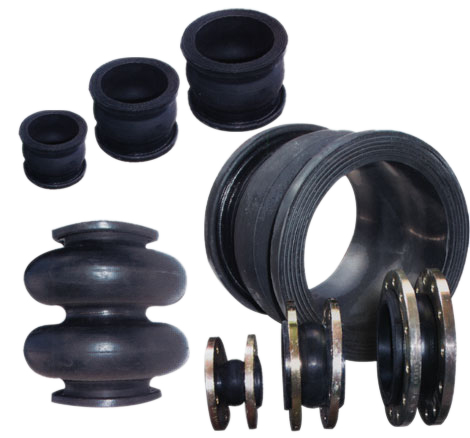
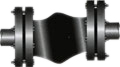
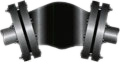
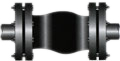
Rubber expansion joints are flexible connectors designed to absorb vibrations, thermal expansions, axial movements, and pressure fluctuations occurring in piping systems. Featuring EPDM and Neoprene bellows construction, these expansion joints provide high durability and are widely used in pumps, boiler rooms, HVAC systems, industrial plants, water pipelines, and various fluid transfer applications.
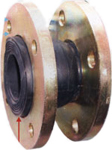
Thanks to their rotating flange design, rubber expansion joints provide easy installation while reducing mechanical stresses within piping systems. This helps extend equipment service life and minimize noise levels.
| Size (DN) | Length (mm) | Flange Outside Diameter (mm) | Inside Diameter (mm) | Bolt Diameter (mm) | Hole Diameter (mm) | Number of Holes |
|---|---|---|---|---|---|---|
| 32 | 100 | 140 | 43 | 16 | 18 | 4 |
| 40 | 100 | 150 | 49 | 16 | 18 | 4 |
| 50 | 100 | 165 | 61 | 18 | 18 | 4 |
| 65 | 100 | 185 | 77 | 18 | 18 | 4 |
| 80 | 100 | 200 | 90 | 20 | 18 | 8 |
| 100 | 100 | 220 | 116 | 20 | 18 | 8 |
| 125 | 120 | 250 | 141 | 20 | 18 | 8 |
| 150 | 120 | 285 | 170 | 22 | 22 | 8 |
| 200 | 120 | 340 | 221 | 24 | 22 | 12 |
| 250 | 120 | 405 | 275 | 24 | 26 | 12 |
| Property | Value |
|---|---|
| Type | Rotating Flange |
| Pressure Rating | PN 10 / PN 16 |
| Operating Temperature | 110°C |
| Burst Pressure | 45 Bar (20°C) |
| Bellows Material | EPDM - Neoprene |
| Reinforcement Fabric | Nylon - Polyamide |
| Flange | DIN 2501 Carbon Steel |
Rubber expansion joints are widely used in water systems, pump installations, fire protection systems, HVAC applications, industrial pipelines, chemical plants, power stations, marine systems, and various fluid transfer lines. By reducing vibration, noise, and mechanical stress, they contribute to safer operation and longer service life of the entire system.
Rotating flange rubber expansion joints manufactured by Formül Kauçuk offer long-lasting performance with EPDM and Neoprene bellows, high-strength nylon-polyamide reinforcement fabric, and DIN 2501 carbon steel flanges. Designed according to PN10 and PN16 pressure ratings, these expansion joints are resistant to operating temperatures up to 110°C and burst pressures of 45 bar. In addition to standard sizes, custom dimensions and various material options are also available to meet specific application requirements.
Site Created By Neturk Copyright 2026 © All Right Reserved.